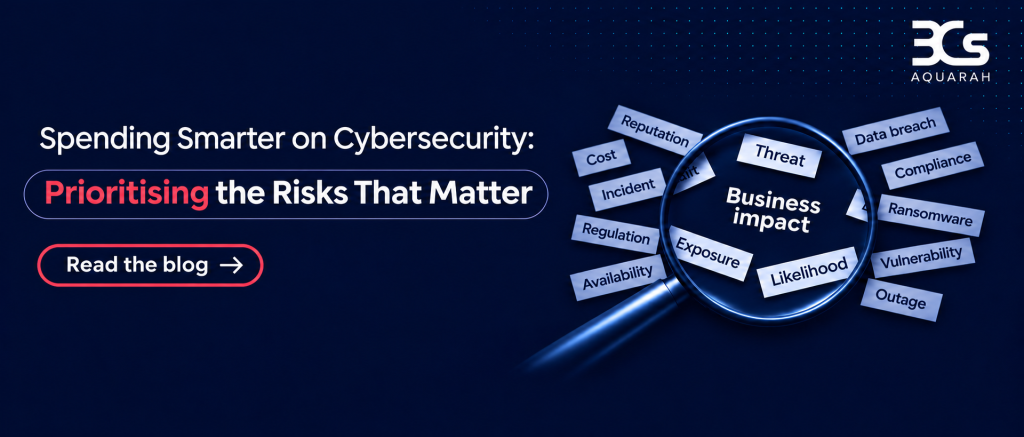
Why More Cybersecurity Spending Doesn't Always Mean Better Protection
It is easy to measure cybersecurity investment by the number of tools deployed, licences purchased or security personnel employed. These are visible indicators of investment, but they do not necessarily demonstrate effectiveness.
For instance, an organisation may have invested in advanced endpoint protection but overlooked vulnerabilities in its internet-facing systems. Another may have implemented strict internal security controls but granted third-party vendors excessive access to sensitive information.
In both cases, money has been spent, but important areas of exposure remain.
Cybersecurity investments should be evaluated based on how effectively they reduce risk, strengthen resilience and support the organisation's ability to respond when incidents occur.
1. Protecting What Matters Most
Not every system, application or dataset carries the same level of risk.
An organisation’s financial systems, customer information, identity records, business-critical applications and operational infrastructure may have very different security requirements.
Yet, without a clear understanding of which assets are most critical, organisations risk spreading their security resources too thinly or investing heavily in areas that do not address their most significant exposure.
Before allocating resources, organisations should understand:
- Which systems and information would cause the greatest disruption if compromised?
- Where are the most significant vulnerabilities?
- Which assets are exposed to external threats?
- What would the financial, operational and reputational consequences of a breach look like?
Security spending should reflect the organisation’s actual risk profile, not simply the availability of new technologies.
2. Balancing Cybersecurity Prevention with Effective Incident Response
Preventing cyberattacks is important, but no security environment is entirely immune to incidents.
Organisations must also consider how quickly they can identify suspicious activity, contain threats, investigate incidents and restore affected operations.
Investments in monitoring and detection, incident response planning, employee readiness and recovery capabilities are essential parts of a well-rounded cybersecurity programme.
A security strategy that focuses exclusively on prevention may leave an organisation unprepared for what happens when preventive controls fail.
3. Aligning Security Investments with Evolving Risk Exposure
As organisations grow, their technology environments become more complex.
New applications, cloud services, employees, vendors and business partnerships can introduce additional points of exposure.
However, security investments do not always grow or evolve at the same pace.
An organisation may continue relying on security controls that were appropriate several years ago, even though its infrastructure, operations and threat exposure have changed considerably.
Regular vulnerability assessments, penetration testing and reviews of external-facing systems can help identify weaknesses that may otherwise go unnoticed.
Cybersecurity budgets should account for changing business requirements and emerging risks, rather than relying entirely on previous investment decisions.
4. Factoring Third-Party Risks into Your Cybersecurity Strategy
Your organisation’s security does not exist in isolation.
Vendors, service providers and technology partners may have access to your systems, business information or sensitive customer data. Weak security practices within these relationships can introduce risks beyond your immediate control.
This makes third-party risk management an important consideration when allocating cybersecurity resources.
Organisations should consider investing in:
- Regular reviews of vendors with access to critical systems or sensitive information.
- Appropriate access restrictions and data minimisation.
- Security requirements within vendor agreements.
- Clear breach notification and incident response arrangements.
- Proper access revocation and data management when vendor relationships end.
A cybersecurity budget that overlooks third-party exposure may leave significant gaps in an organisation’s overall security posture.
5. Measuring the Business Value of Cybersecurity Investments
Cybersecurity investment should not be assessed solely by the amount spent or the number of tools implemented.
Organisations need meaningful ways to evaluate whether their investments are improving security outcomes.
Some useful indicators include:
- Reduction in critical vulnerabilities and remediation time.
- Time taken to detect and respond to security incidents.
- Coverage of critical systems and assets.
- Completion of security assessments and remediation activities.
- Effectiveness of incident response exercises.
- Compliance with relevant security and regulatory requirements.
These measures help leadership understand where investments are delivering value and where additional attention may be required.
They also create a stronger basis for conversations between cybersecurity teams, finance departments and executive leadership.
A Better Approach to Cybersecurity Budgeting
Effective cybersecurity budgeting begins with understanding risk.
Rather than starting with the question, “Which security solution should we buy next?”, organisations should first ask, “What are we most exposed to, and what do we need to address it?”
This requires collaboration between cybersecurity teams, business leaders, finance departments and other relevant stakeholders.
It also requires regular reassessment. A cybersecurity budget should not be a fixed annual allocation that remains untouched while the organisation’s risk profile changes.
The goal is to ensure that every major investment has a clear purpose, addresses an identified risk and contributes to stronger security outcomes.
The organisations that make meaningful progress are those that understand their exposure, identify their most critical vulnerabilities and invest in the capabilities needed to prevent, detect, respond to and recover from cyber incidents.
Contact our team to learn how we can support your organisation’s cybersecurity priorities.