
Something Just Happened. What Will You Do Next?
You know not to click suspicious links. You’ve heard the warnings about phishing emails, fraudulent messages, and compromised passwords. You might even have completed cybersecurity awareness training. But what happens when a threat appears at the worst possible moment?
Imagine you’re 30 minutes away from an important deadline when an urgent email arrives, supposedly from your IT department. Your account has been compromised, it warns, and you must verify your credentials immediately or risk losing access. You know the warning signs. But you’re under pressure, the message sounds convincing, and you have work to finish.
What do you do next?
This is the reality of modern cybersecurity. Threats don’t always arrive when we’re prepared for them; they exploit urgency, distraction, familiarity, and trust. Consider fraudulent messages impersonating banks, government agencies, or delivery companies. By warning recipients about alleged violations, account restrictions, or outstanding payments, cybercriminals turn fear of consequences into pressure to act. The tactics and the warnings are familiar, yet these attacks remain effective. This raises an important question: If cybersecurity awareness continues to grow, why do people still make decisions that put them at risk?
The answer isn’t necessarily a lack of knowledge. It’s that knowing what to do and doing it under pressure are two different things.
The Gap Between Awareness and Action
Cybersecurity awareness has become essential to how individuals and organisations protect themselves. We’ve learned to recognise phishing attempts, create stronger passwords, question suspicious requests, and safeguard sensitive information. Organisations invest in training, simulations, and security policies to reinforce these lessons. These efforts matter, but awareness alone cannot guarantee the right response.
Recognising a suspicious email doesn’t mean you’ll handle it correctly during a stressful workday. Knowing that software updates are important doesn’t guarantee they’ll be applied before vulnerabilities are exploited. The real test of cybersecurity awareness isn’t simply what we know, it’s what we do when that knowledge is put to the test.
For organisations, one poor decision can have consequences beyond the individual involved, from compromised information and financial losses to operational disruption. But employees shouldn’t bear this responsibility alone. Effective cybersecurity requires strong technical controls, clear processes, continuous monitoring, and a culture where people feel confident reporting concerns. Cybersecurity resilience is strongest when people are equipped to act, and organisations are prepared to support those actions.
At 3Cs Aquarah, we believe building cyber confidence means bridging the gap between recognising threats and responding effectively.
What You Do Next Matters: Pause. Verify. Protect.
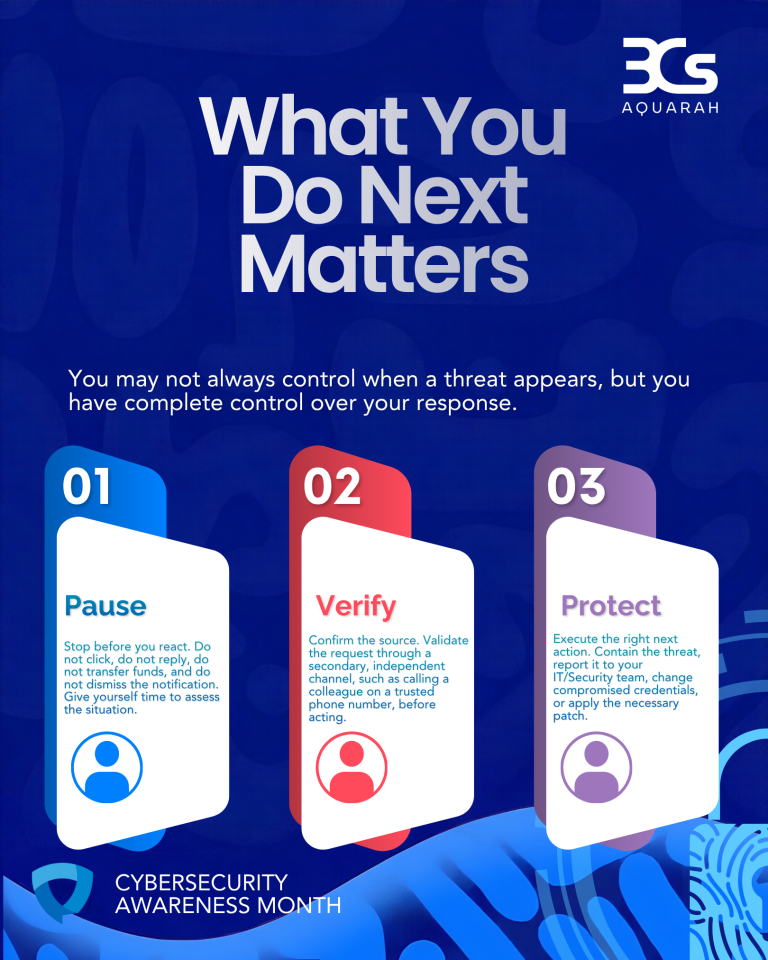
This thinking inspired What You Do Next Matters, our cybersecurity awareness campaign built around three practical steps:
PAUSE. Before responding to an unexpected request or suspicious notification, assess what’s happening. Cybercriminals manufacture urgency to encourage impulsive decisions. Pausing doesn’t mean ignoring threats or delaying necessary action; it means resisting pressure long enough to recognise potential warning signs.
VERIFY. Establish whether the request is genuine. A familiar name, convincing logo, or authoritative tone doesn’t guarantee legitimacy. Confirm unusual requests through trusted channels rather than relying on contact details or links supplied in suspicious messages.
PROTECT. Take the appropriate next step. Report suspicious activity, secure compromised accounts, apply necessary updates, or escalate incidents through established procedures. The response depends on the situation, but timely action matters.
These steps don’t replace technical safeguards or incident response procedures. They reinforce a simple principle: Don’t let urgency, assumptions, or familiarity make security decisions for you.
For organisations, this approach must extend beyond individual habits. Employees need clear reporting channels, defined responsibilities, and confidence that raising concerns won’t result in blame. Security teams need effective tools and processes, while leadership must make cybersecurity part of everyday operations. Technology alone cannot compensate for unclear procedures or risky behaviours. Equally, awareness training cannot replace adequate security controls. People, processes, and technology must work together.
Take our free Cybersecurity Awareness Test to assess how cyber-aware you are.