
Most modern organizations have made substantial investments in securing their digital estates. They actively monitor corporate networks, deploy automated vulnerability patches, fortify endpoints, and conduct rigorous security assessments.
Yet, despite these comprehensive measures, a critical component of core security infrastructure frequently operates completely in the background, quietly falling through the organizational cracks: digital certificates.
Digital certificates serve as the foundation of online trust. They authenticate web applications, safeguard encrypted communication channels, and establish secure protocol connections across endpoints, platforms, and user sessions. However, despite playing such a pivotal role in cybersecurity, certificate management is far too often mischaracterised as a routine administrative or minor technical maintenance task, rather than a top-tier security and business continuity imperative.
This operational disconnect gives rise to what cybersecurity leaders call the certificate blind spot.

Understanding the Certificate Blind Spot
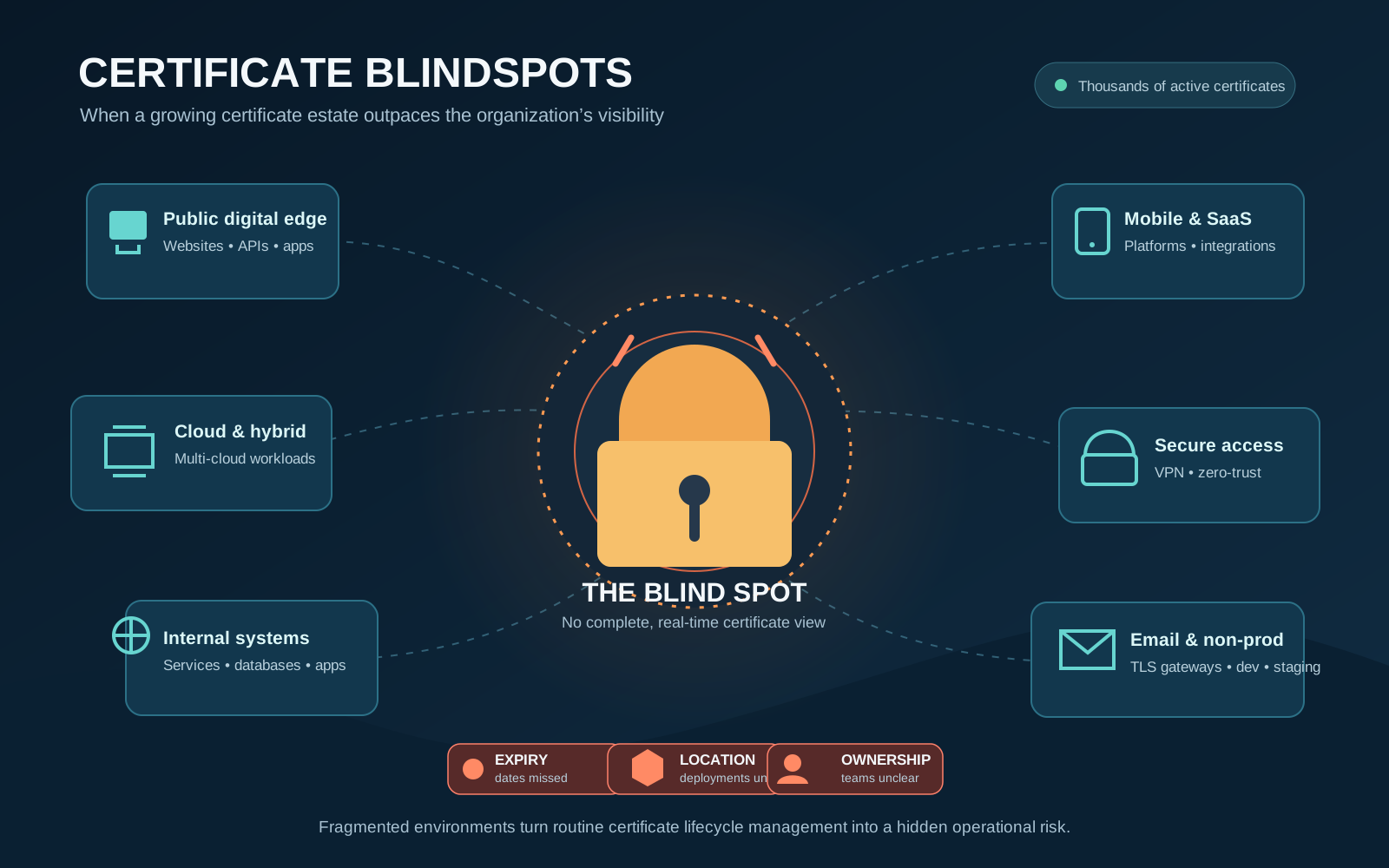
A certificate blind spot occurs when an organisation lacks complete, real-time visibility into the digital certificates deployed across its infrastructure. This includes losing track of upcoming expiration dates, deployment locations, or the specific teams accountable for ongoing life-cycle management.
In modern enterprise environments, establishing full visibility is harder than it sounds. Organizations no longer rely on a small handful of public-facing web servers. Instead, thousands of active certificates support an expansive digital footprint, including:
- Public websites, modern web applications, and customer-facing APIs
- Multi-cloud architectures and hybrid infrastructure workloads
- Internal microservices, databases, and enterprise applications
- Mobile software platforms and third-party SaaS integrations
- Virtual Private Networks (VPNs) and zero-trust remote access systems
- Corporate email security infrastructure (S/MIME, TLS gateways)
- Staging, development, and sandbox environments
As technology environments grow increasingly fragmented and complex, maintaining complete oversight becomes nearly impossible without dedicated tools. Consequently, critical certificates are routinely forgotten long before they reach their end of life.
The Core Issue: Expiration Without Visibility
It is important to emphasize that certificate expiration is not inherently a security flaw. Certificates are engineered to expire by design to maintain cryptographic integrity, enforce key rotation, and preserve digital trust.
The true vulnerability is an organization’s inability to identify which certificates are nearing expiration and where they reside.
Scenario: Consider a standard enterprise scenario: hundreds of certificates are distributed across different software development teams, cloud environments, and vendors. When a key certificate silently reaches its expiration date without warning, the dependent service abruptly fails. Secure channels break, browser security warnings block users, API integrations crash, and core business operations grind to a halt.
What begins as a minor administrative oversight quickly escalates into an acute operational crisis. In far too many instances, the first indication of a certificate failure is an unannounced system outage.
Why Does the Certificate Blind Spot Persist?
- Unclear Ownership & Governance:Whoultimately owns certificate lifecycle management? Is it Security, Infrastructure, IT Support, DevOps, or Application Engineering teams? When governance is ambiguous, certificates inevitably slip through organizational seams.
- Multi-Cloud & Environment Sprawl:Enterprise workloads are rarely confined to singleon-premise data centers. Operating across private clouds, multi-cloud platforms, and third-party architectures introduces thousands of connection points—and just as many untracked certificates.
- Dependence on Unscalable Manual Processes:Spreadsheets, shared document trackers, and calendar reminders may suffice for a small business managing five certificates. They completely fail when scaled to modern enterprise environments with hundreds or thousands of assets. Manual systems depend entirely on human diligence tolog every renewal, replacement, or retirement.
- Silent Expirations & False Security:A certificate nearingexpiration operates completely normally until the second it expires. Because there are rarely warning indicators prior to failure, organizations frequently confuse the absence of immediate failure with the absence of operational risk.
The Cost of Unmanaged Expirations
An unexpected certificate expiration is rarely just a temporary technical hiccup. Depending on the critical systems supported, the downstream business impact can be severe:
- Severe Service Downtime: Mission-critical applications, customer portals, and internal workflows become instantly inaccessible.
- Transactional Disruption: E-commerce gateways, automated financial processing, and API-driven workflows cease functioning.
- Emergency Remediation Overhead: Engineering and security teams must drop planned strategic initiatives to engage in high-stress, emergency troubleshooting.
- Reputational & Brand Damage: End users and clients do not see a technical certificate error—they experience a broken, untrustworthy, or insecure service.
- Compliance & Security Exposure: Gaps in certificate governance undermine corporate security frameworks, compliance standards, and overall trust posture.
The total financial and operational cost of a major outage far exceeds the trivial cost of proper certificate governance.
Moving from Reactive Management to Total Visibility
To protect digital trust and maintain operational continuity, leadership must shift from reactive crisis response to proactive lifecycle management. Achieving complete visibility requires asking critical governance questions before an incident occurs:
- What total volume of digital certificates currently exists across our environment?
- Where are these certificates deployed, and which specific systems rely on them?
- Who is explicitly accountable for each certificate’s renewal and maintenance?
- When does each certificate expire, and what is its operational criticality level?
- What exact workflow takes effect if a critical certificate unexpectedly fails?
Building a resilient certificate infrastructure does not need to be complex. It requires establishing automated inventory discovery, continuous lifetime monitoring, clear operational ownership, and structured renewal workflows.
Take Control of Your Digital Trust
Your next certificate expiration is already on the calendar. Do you know when and where it will happen?
Get in touch with a member of our team today to get started.