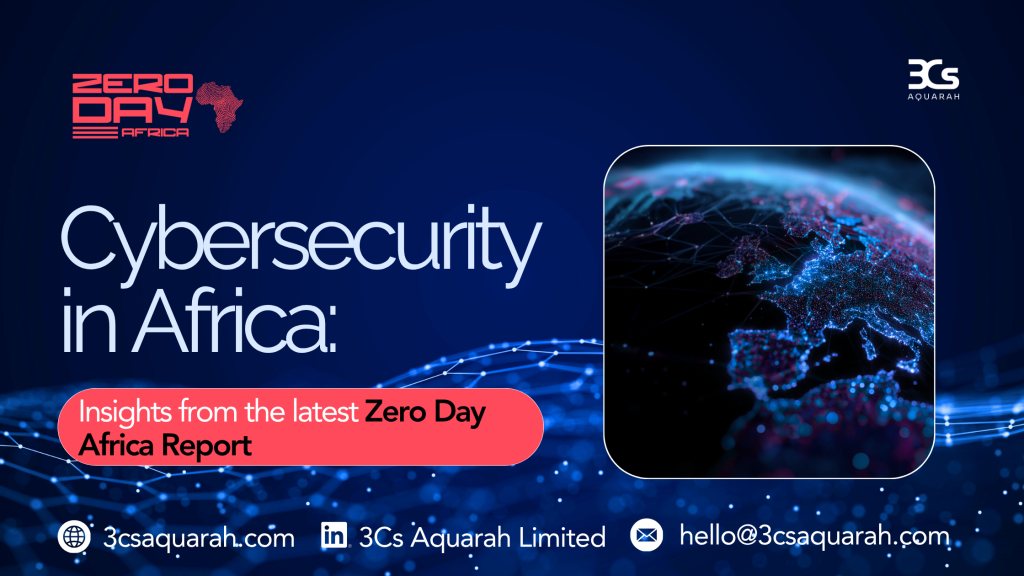
We are thrilled to announce the launch of Zero Day Africa, 3Cs Aquarah’s dedicated intelligence newsletter and report series, now live on our website and LinkedIn page. This marks a significant milestone in our mission to become Africa’s foremost customer-centric cybersecurity company, and to equip organisations across the continent with the timely, relevant intelligence they need to stay secure in an increasingly complex threat environment.
What Is the Zero Day Africa Report?
Africa’s digital economy is growing at pace, but the security infrastructure supporting it hasn’t always kept up. The Zero Day Africa Report was created to change that. It is 3Cs Aquarah’s vehicle for delivering focused, Africa-specific cybersecurity intelligence: the threats targeting African organisations, the vulnerabilities being exploited, and the strategic actions businesses need to take right now.
The report, written for security leaders, business executives, and technology professionals who need clear, actionable insight, is freely available to download directly from our website. Additionally, we have created a bi-weekly newsletter on LinkedIn to keep you updated on all things cybersecurity.
Why This Matters
For too long, cybersecurity intelligence has been shaped primarily by the threat landscapes of North America and Europe. African organisations have had to adapt generic advice to a context that is fundamentally different, different infrastructure maturity, different regulatory environments, different threat actors, and different business realities.
Zero Day Africa exists to close that gap. It is intelligence built for Africa, by Africa’s cybersecurity practitioners.
At 3Cs Aquarah, our team brings years of combined industry experience across the UK, Nigeria, Ghana, South Africa, Uganda, Zambia, and the UAE. The Zero Day Africa Report is the natural extension of the work we do every day with our clients, translating deep technical expertise into strategic clarity.
Highlights From the Report
The inaugural edition of Zero Day Africa does not shy away from the hard truths facing organisations on the continent. Before we get into the themes, consider this: Interpol estimates that 30–40% of cyber incidents occurring in Africa go entirely undocumented. That means the threat picture most organisations are working from is, at best, incomplete. The real scale of the problem is almost certainly worse than the data suggests.
Against that backdrop, the report covers four critical areas:
Cloud Misconfigurations: As African enterprises accelerate their move to cloud infrastructure, misconfigurations remain one of the most common, and most avoidable entry points for attackers. The report examines how this is playing out across the region and what secure cloud adoption looks like in practice.
Third-Party and Supply Chain Risks: No organisation operates in isolation. The report explores how vulnerabilities introduced through vendors, partners, and service providers are increasingly being exploited to compromise otherwise well-defended organisations.
Insider Threats: Often underestimated, insider threats represent a serious and growing risk. The Zero Day Africa Report addresses how organisations can build cultures and controls that reduce this exposure without eroding employee trust.
The Real Cost of Lost Trust: Beyond the technical impact of a breach, the report examines the reputational and commercial consequences that follow, and why trust is the asset that is hardest to rebuild once it is gone.
The Numbers That Should Concern Every African Business
Two statistics from the report deserve to be read twice:
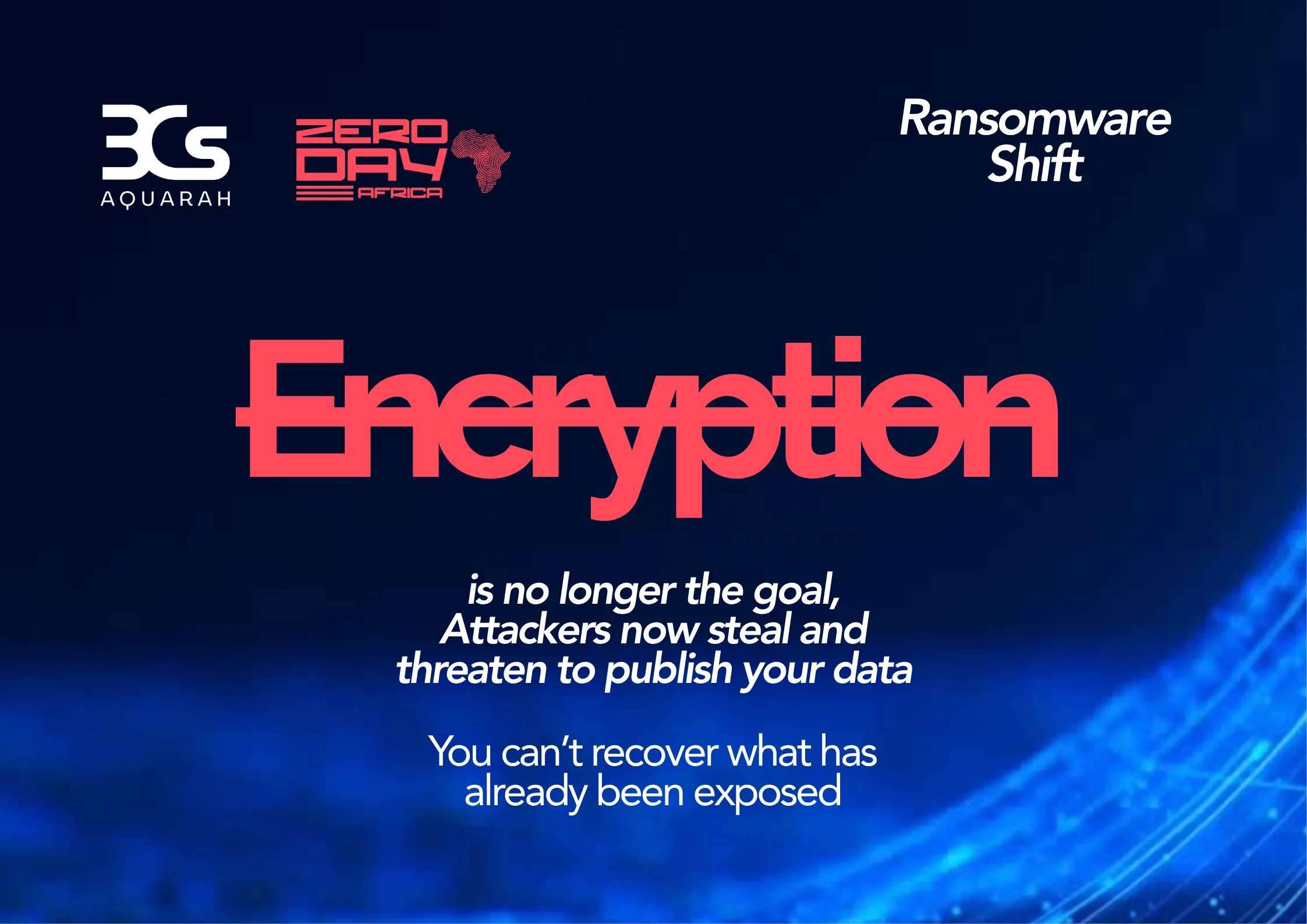
Ransomware groups are now spending an average of 10+ days inside your systems before you even know they are there.
That is not a smash-and-grab. It is a calculated, patient operation. Attackers mapping your environment, identifying your most valuable data, and positioning themselves for maximum impact before they strike. By the time most organisations detect the intrusion, the damage is already done.
Living-off-the-Land (LotL) attacks use your own system tools against you, which is precisely why traditional defences miss them entirely.
Rather than bringing in suspicious external software, LotL attackers weaponize the legitimate tools already on your system: PowerShell, Windows Management Instrumentation, remote desktop utilities. To a conventional security tool, it looks like normal activity. That invisibility is the point. These are not edge cases. They are increasingly the standard operating procedure of the threat actors targeting African organisations right now.
Africa’s digital growth is accelerating, but are organisations building on secure foundations?
These are the questions Zero Day Africa is designed to answer, edition after edition.
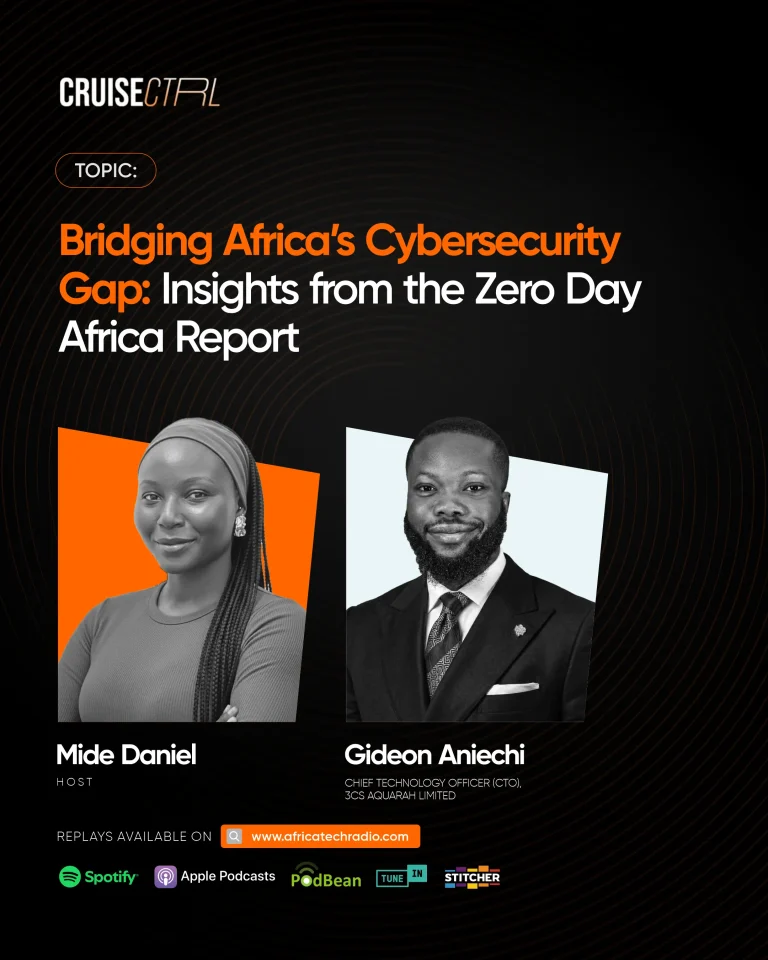
The launch of the Zero Day Africa Report was also featured on Africa Tech Radio (ATR) – the continent’s first online radio station dedicated solely to technology. Our Chief Security Officer, Gideon Aniechi, joined ATR to unpack the report’s findings, speaking candidly about the threat landscape facing African organisations today.
The conversation covered everything from the technical realities of cloud misconfigurations to the harder-to-quantify cost of damaged trust following a cyber incident. It is a must-listen for anyone responsible for security strategy in an African organisation.
How to Access the Report
Accessing Zero Day Africa is simple and free:
- Download from our website at here
- Subscribe on LinkedIn here, to receive every new edition directly in your feed and inbox.
- Listen to the Africa Tech Radio feature to hear our CSO discuss the findings in depth.
- Share it with your security team, leadership, and network. The more organisations that are informed, the more secure our collective digital ecosystem becomes.
Stay Ahead. Stay Secure.
The Zero Day Africa Report is just getting started. Each edition will bring fresh intelligence, analysis, and guidance tailored to the realities of operating in Africa’s evolving digital landscape.
If you have questions about the report, want to discuss how the threats it covers apply to your organisation, or are interested in working with 3Cs Aquarah, we would love to hear from you.
Email: hello@3csaquarah.com